
How Does BAH Affect What Home You Can Afford?
One of the most common questions we hear from military families is some version of "How much house can we buy with our BAH?" Many of them have already typed their housing allowance into an online mortgage calculator and gotten an answer. That answer can miss by a wide margin in either direction.
Your BAH figure gives you a starting point for the math. Taxes, insurance, loan terms, and the specific town you pick decide the rest.
What BAH Is Designed to Cover
The Department of Defense sets your Basic Allowance for Housing using three inputs: your rank, your dependency status, and the ZIP code of your permanent duty station. DoD builds the rates from local rental costs and utilities, and DoD's own guidance says BAH isn't intended to cover all of your housing costs.
The government designed BAH around renting. Once you buy, your monthly payment includes principal and interest plus property taxes, homeowners insurance, and any association dues. You also take on the furnace, the roof, the gutters, and any other mechanicals and aging components that may need repairs now or later.
BAH follows the ZIP code of your duty station. If you report to Naval Station Great Lakes, you'll draw the same allowance whether you buy in Gurnee or farther west in McHenry County. Your property tax bill, commute, and insurance quote will change with the address. Your BAH won't.
How a VA Lender Counts Your BAH
Under VA underwriting rules, a lender can count verified BAH as income. The lender confirms the amount on your Leave and Earnings Statement. BAH is tax-free, so the lender may "gross up" that income, adjusting it upward to reflect its full value against taxed pay when calculating your debt-to-income ratio. VA uses 41% as its benchmark for that ratio.
The VA also runs a second test called residual income. Your lender subtracts your estimated shelter costs from your take-home pay and checks what's left for food, gas, childcare, and everything else. Those shelter costs include the full mortgage payment, HOA or condo fees, utilities, and maintenance. The residual income test uses your actual income, with no gross-up.
Two families with identical BAH can qualify for different price ranges because of that second test. You lose residual income fast when a house comes with a high tax bill or a steep HOA fee.
Why Generic Calculators Get It Wrong
Most online calculators assume you'll put money down, pay private mortgage insurance, and owe a national-average tax rate. A VA purchase loan requires no down payment as long as the sale price doesn't exceed the appraised value, and it carries no PMI.
VA loans do have a one-time funding fee. First-time users putting less than 5% down pay 2.15% of the loan amount, and you can pay it at closing or finance it into the loan. If you receive VA compensation for a service-connected disability, you don't pay the fee at all. Generic calculators have no place to enter any of that.
We built our own mortgage calculator to handle those details. Choose VA and it starts you at $0 down with no PMI, then sets the funding fee from your status: first use, subsequent use, or exempt. You can plug in the tax bill for the town you're considering, a real insurance quote, and any HOA dues to see your full monthly payment. Switch to FHA or conventional to compare. Your lender still has to verify your BAH and run the residual income test, but you'll start that conversation with a realistic number.
Chicagoland Property Taxes Change the Answer
Illinois homeowners pay some of the highest property taxes in the country, and the bill varies across the region. The Tax Foundation's county data puts the median effective rate at about 1.73% in Cook County and about 2.26% in Lake County, home to Great Lakes.
On a $350,000 home, those rates work out to about $505 a month in Cook and about $659 in Lake. At a 6% interest rate, used here for illustration, that $155 monthly gap would cover principal and interest on about $26,000 of loan. Rates also shift from town to town inside each county, because school and park districts set their own levies. Before you write an offer, ask to see the actual tax bill for that house. A county average won't tell you what one specific property costs to own.
Veterans with a service-connected disability rating should look into Illinois' homestead exemption for veterans with disabilities. At a 70% rating or higher, the first $250,000 of a home's equalized assessed value is exempt. We cover more of these benefits in our post on VA loans and service-connected disability.
A Practical Example Before You Tour
Say your family draws $2,400 a month in BAH. A lender who knows VA loans can convert that into a loan amount at today's rate, then layer in the tax rate for the towns you like, a real insurance quote, and any association dues.
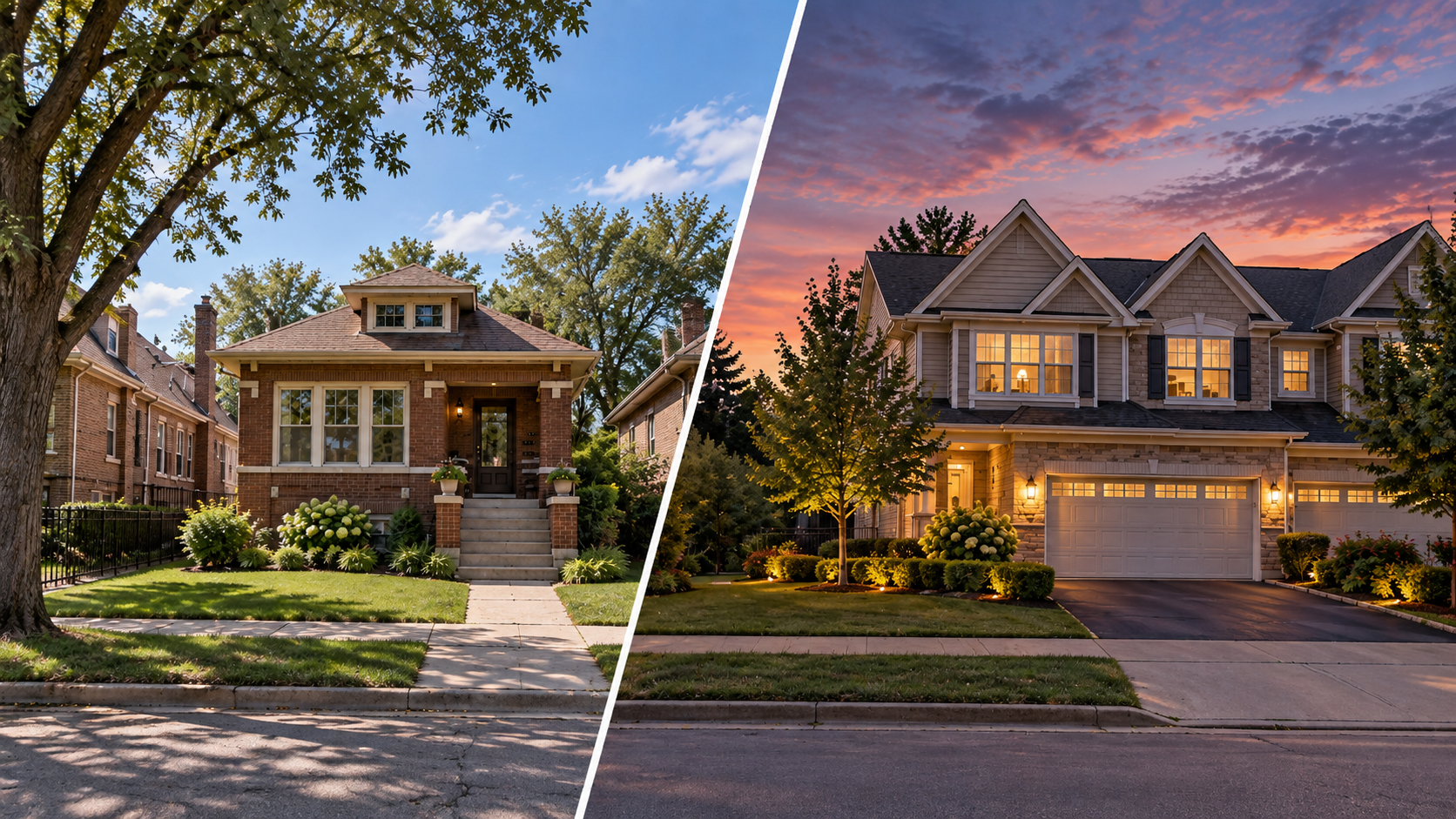
Picture two homes at the same list price. One is a brick bungalow in the city with no HOA. The other is a suburban townhome with a $300 monthly association fee and a higher tax rate. Your BAH might cover the first with room to spare and leave you short on the second. You want to learn that before you fall for a kitchen, not after.
Your BAH will also change if you PCS, since DoD recalculates it for the new duty station. If you already own, our post on what happens to your VA loan when you PCS walks through your options.
Where Our Experience Helps
We're a veteran-led team, and we understand the paperwork and timelines that come with military orders. We also work with lenders who know the VA loan inside and out, including how BAH counts as income and how a PCS can shift your closing timeline, and can make recommendations when helpful. As a Mil-Estate affiliate, and Chicagoland's only Mil-Estate affiliated team, we help on both ends of a move. Our relocation concierge helps families moving into the area sort out towns and commutes from a distance. If orders send you somewhere else, our network can connect you with an agent who knows that market.
Civilian buyers face the same math without the allowance, and we help them weigh it the same way.
If you'd like help turning your BAH into a realistic price range, reach out to us. We're glad to sit down and work through the numbers with you.