
Can I Use a VA Loan on a Home With an ADU?
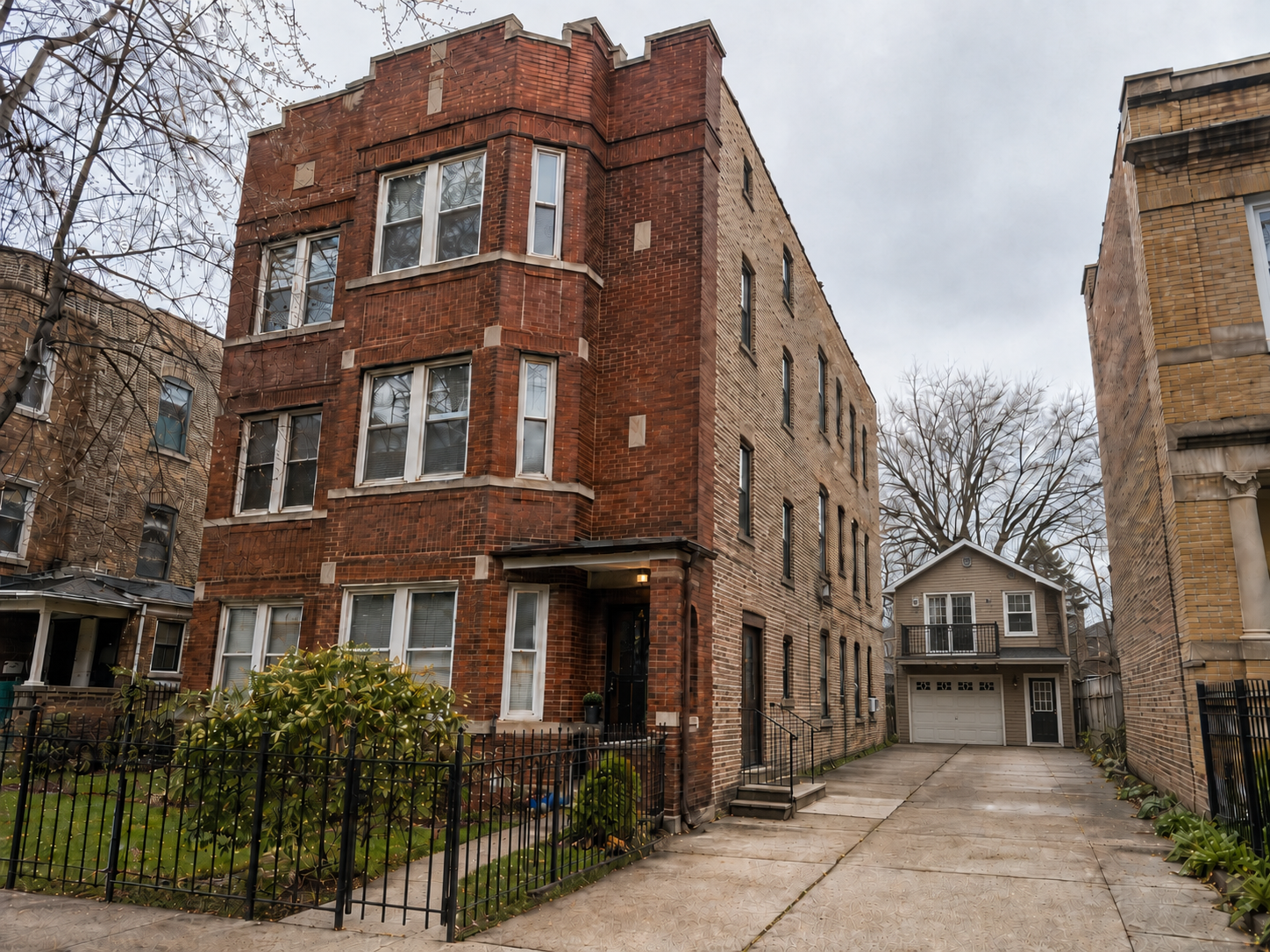
Yes! A home with an accessory dwelling unit, or ADU, can be purchased with a VA loan.
The presence of an ADU doesn’t automatically make a property ineligible for VA financing. The bigger questions are how the additional living space is configured, whether its use is legal, how the VA appraiser classifies the property, and whether the home as a whole meets VA appraisal and lending requirements.
Those questions matter in Chicago and the surrounding suburbs, where listings may describe additional living space as an ADU, garden unit, in-law apartment, basement apartment, coach house or simply a “second unit.” Those terms can describe very different properties from a zoning, appraisal and lending standpoint.
What Does the VA Consider an ADU?
VA appraisal guidance defines an accessory dwelling unit as a living unit containing kitchen, sleeping and bathroom facilities that has been added to or created within a single-family dwelling, or is located in a detached structure on the same property.
The VA considers the primary residence and ADU together to be one real estate entity. Its guidance also specifically says an ADU may or may not have separately metered utilities or separate means of ingress and egress. Read the VA Lender’s Handbook guidance on ADUs.
That’s the written VA standard.
In our experience working with VA purchases, though, properties with clearly separated living spaces tend to create fewer questions during appraisal and underwriting. A legitimate second entrance, a clearly defined kitchen and living area, and especially separate utilities or meters can make the property’s configuration easier to understand and document.
Those features aren’t required for VA eligibility, and their presence doesn’t guarantee appraisal approval. We have simply seen fewer appraisal issues when the accessory space is clearly identifiable and its relationship to the primary residence isn’t ambiguous.
That distinction matters: the VA doesn’t require separate utilities or an entrance, but in an actual transaction, clearer separation can still help produce a cleaner file.
Is It an ADU or Actually a Two-Unit Property?
This can matter more than the terminology used in the listing.
VA instructions require the appraiser to determine whether the property is a single-family dwelling with an ADU or a two-family dwelling. The appraiser also considers the property’s highest and best use, which must be a legal use. See the VA’s appraisal guidance.
If the property is actually considered a two-family dwelling, it’s appraised differently. VA guidance directs the appraiser to use the Small Residential Income Property Appraisal Report used for two- to four-unit residential properties.
That’s why we wouldn’t rely solely on an MLS description such as “single-family home with income-producing garden unit.”
The garden unit could be a legitimate ADU. It could also be a legal second dwelling unit, a legal nonconforming use, an improperly converted basement, or something else entirely.
Those aren’t minor distinctions when you’re depending on VA financing.
Legality and Zoning Matter
The VA’s appraisal guidance requires the property’s highest and best use to be legal. That makes local zoning, permitting and property records worth checking before the appraisal whenever there’s an additional dwelling space.
Depending on the property and municipality, we’d want to understand:
How many dwelling units is the property legally recognized as having?
Does the zoning allow the existing configuration?
Were permits issued for a newer conversion or addition?
Is there a certificate of occupancy, zoning certificate or other municipal record that helps establish the property’s legal use?
Does the assessor or municipality describe the property differently than the MLS?
Is the additional space truly an ADU, or could the property actually be a two-unit building?
Chicago-area housing stock makes this especially important. Plenty of older properties have been modified repeatedly over decades, and the physical layout you see during a showing doesn’t always line up neatly with the property’s legal use.
That doesn’t automatically make the home a bad candidate for VA financing. It means we’d rather investigate the discrepancy before the appraiser or underwriter discovers it later.
How Does the VA Appraiser Value an ADU?
The VA also gives appraisers specific instructions for handling the value of an ADU.
The ADU’s living area isn’t simply added to the gross living area of the primary residence. Instead, the appraiser is instructed to analyze and value the accessory unit separately in the appraisal. Review the VA’s ADU appraisal requirements.
That can make comparable sales important.
If a property has an unusually large or valuable accessory unit but there are very few nearby sales with similar ADUs, the appraiser may have less market evidence available to support the value a buyer or seller attributes to that space.
That doesn’t mean the property can’t appraise. It means the cost of creating an ADU doesn’t automatically translate dollar-for-dollar into appraised value.
This is one reason we like to look at the property’s configuration and available comparable sales before treating an ADU as a certain amount of additional value.
What About VA Minimum Property Requirements?
A VA-approved appraiser also evaluates whether the property meets VA Minimum Property Requirements, commonly called MPRs.
The VA explains that the appraisal establishes an opinion of value and checks the home against basic property-condition requirements. It also makes clear that a VA appraisal is not the same thing as a home inspection. VA: Buying a Home With a VA-Backed Loan.
That distinction matters with accessory living spaces.
A finished basement apartment, converted garage or detached coach house still has to be considered as part of the property being financed. A nicely renovated kitchen and bathroom don’t resolve zoning, safety, structural or property-condition issues elsewhere in the space.
VA also updated its Minimum Property Requirements effective May 1, 2026, removing or changing several older appraisal requirements. Read the VA’s 2026 appraisal requirement update.
That’s worth knowing because a lot of generic “VA appraisal checklist” material online predates those changes.
Can Rental Income From the ADU Help You Qualify?
Potentially, but this is where the property’s classification becomes especially important.
VA underwriting rules specifically allow prospective rental income to be considered when a veteran purchases a qualifying multi-unit property and occupies one of the units.
Current VA guidance generally requires the borrower to demonstrate a reasonable likelihood of success as a landlord and maintain at least six months of mortgage-payment reserves. For a qualifying multi-unit property, the amount of rental income included in effective income is generally based on 75% of qualifying rent. See the VA underwriting rules for rental income.
That rule is particularly useful for veterans buying two- to four-unit properties.
A single-family property with an ADU isn’t automatically the same underwriting situation.
If you need income from the accessory unit to qualify for the mortgage, we’d want the lender reviewing that specific property before you make assumptions about how much income can be counted.
“The listing says the unit rents for $1,500 per month” and “the lender has confirmed that $1,125 per month can be included in qualifying income” are two very different things.
You Still Have to Occupy the Property
A VA purchase loan is intended for an owner-occupied home. The eligible borrower must intend to live in the property being purchased. VA purchase loan eligibility and occupancy requirements.
That doesn’t prevent the property from containing additional residential space.
The VA also expressly allows eligible borrowers to use a VA-backed purchase loan for a single-family home containing up to four units, provided the borrower meets the program and lender requirements and intends to occupy the property. See what properties can be purchased with a VA loan.
For the right buyer, that can make an ADU, two-flat, three-flat or four-unit property particularly useful.
The important part is getting the property’s actual legal and appraisal classification right.
What We Would Check Before Writing an Offer
If a VA client comes to Dorazio Real Estate with a property containing an ADU or other secondary living space, we want to understand that space before treating it as an established benefit of the property.
Depending on the situation, that can mean looking at available zoning and municipal records, permit history, property classification, MLS and tax records, comparable sales, the physical relationship between the primary residence and accessory space, and how the buyer intends to use it.
We’d also get the VA lender involved early if rental income is part of the qualification strategy.
And based on our experience with VA transactions, we’d pay attention to how clearly the additional unit functions as its own space. Separate entrances and utilities aren’t mandated by VA guidance, but we’ve generally seen clearly separated units create fewer appraisal questions than spaces whose use or configuration is difficult to define.
That kind of homework is much easier to do before an offer than after an appraisal has identified a problem.
FAQ: VA Loans and ADUs
Does an ADU disqualify a home from VA financing?
No. VA appraisal guidance specifically addresses single-family homes containing accessory dwelling units.
The appraiser does, however, need to determine whether the property is actually a single-family residence with an ADU or a two-family dwelling.
Does a VA-financed ADU need separate utility meters?
No. VA guidance specifically states that an ADU may or may not have separately metered utilities.
In our experience, clear utility separation can still help make the nature and use of the additional living space easier for the appraiser, lender and other parties to understand.
Does the ADU need its own entrance?
No. VA guidance also states that an ADU may or may not have separate ingress and egress.
That doesn’t mean configuration is irrelevant. A clearly independent entrance is one of several features we’ve seen reduce ambiguity about how an accessory unit functions.
Can I use ADU rent to qualify for my VA loan?
Possibly, but get an answer from the lender based on the actual property.
VA has established rules for using prospective rental income from qualifying multi-unit properties, but a single-family residence with an ADU shouldn’t automatically be assumed to receive identical underwriting treatment.
Can I use a VA loan to buy a two-flat?
Yes. VA financing can be used for qualifying residential properties containing up to four units, provided the veteran will occupy the property and the borrower and property meet applicable VA and lender requirements.
What should I investigate before buying a home with an ADU?
Start with the property’s legal use, zoning, permits and actual configuration. Then compare those records with what you’re seeing physically and how the property is being marketed.
If rental income matters to the purchase, involve the VA lender before writing the offer rather than assuming the advertised rent will count toward qualification.
Dorazio Real Estate works with veterans and VA financing throughout Chicago and the suburbs, including multifamily properties and homes with less conventional configurations. If you’re considering a property with an ADU, garden unit, coach house or other additional living space, contact us before you write the offer. We can help research the property, identify questions worth answering and coordinate with your lender before those issues become appraisal or closing problems.